Research Article
Issue Editorial Board

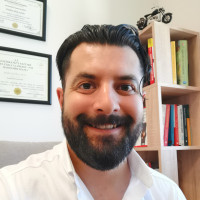

Dr. Ahmet Salih Şimşek received his bachelor's degree in Mathematics from Erciyes University in 2009. He received his master's degree from Ankara University, Department of Measurement and Evaluation in Education in 2012. He received his PhD degree from Ankara University, Department of Measurement and Evaluation in Education in 2017. After working as an Assistant Professor at Cumhuriyet University Faculty of Education between August 2010 and September 2017, Şimşek started to work as an Assistant Professor at Kırşehir Ahi Evran University Faculty of Education in September 2017 and is still working. She worked as a visiting researcher at the University of Twente (Department of Learning, Data-Analytics and Technology) in 2019 for her postdoctoral studies. The researcher continues her research and development activities on the development of measurement tools and methods in education and psychology. She is particularly interested in the development of computerized individualized tests, comparison of instruments and methods for measuring psychometric properties, and assessment of student achievement for hybrid teaching method. She teaches research methods, quantitative data analysis and measurement and evaluation courses at undergraduate and graduate levels.

Kişisel Bilgiler
Adı Soyadı : Bayram ERDEN
Doğum Yeri ve Yılı : Ankara/1986
Adres : Kültür Mah. Pınar Sok. No:19/15-C Blok, Merkez/BOLU
İletişim Adresi : 0 506 609 12 03, [email protected]
Yabancı Dil : İngilizce
Öğrenim Bilgileri
İlköğretim : Nuh Eskiyapan İlkokulu/ Kâmil Ocak Ortaokulu-1999 Keçiören-Ankara
Ortaöğretim : Hasanoğlan Atatürk Anadolu Öğretmen Lisesi-2003 Elmadağ-Ankara
Lisans : Abant İzzet Baysal Üniversitesi Eğitim Fakültesi Türkçe Öğretmenliği Bölümü- 2007- Bolu
Yüksek Lisans : Abant İzzet Baysal Üniversitesi, Eğitim Bilimleri Enstitüsü, Eğitim Bilimleri Anabilim Dalı, Eğitim Programları ve Öğretimi Bilim Dalı.
Doktora :
Çalışma Yaşamı
2007-2009 : Varımlı İlköğretim Okulu / Türkçe Öğretmeni-Şırnak
2009-2010 : Varımlı İlköğretim Okulu/ Müdür Vekili-Şırnak
2010-2011 : Hasan Ali Yücel İlköğretim Okulu/Türkçe Öğretmeni-Sultanbeyli
2011-2013 : Behiye Baysal Ortaokulu/Türkçe Öğretmeni-Bolu
2013-2016 : Behiye Baysal Ortaokulu/Müdür Yardımcısı- Bolu
2016- … : 50. Yıl İzzet Baysal Ortaokulu/Türkçe Öğretmeni- Bolu


1976 yılında Malatya Doğanşehirde doğdum. Hacettepe Üniversitesi Eğitim Fakültesi İngilizce Öğretmenliği Bölümünde lisan eğitimini 2001 yılında tamamladıktan sonra İnönü Üniversitesi Eğitim Fakültesi İngilizce Öğretmenliği bölümünde okutman olarak göreve başladım. 2006 yılında Eğitimi Bilimleri Eğitim Yönetimi Anabilim dalında yüksek lisans, 2017 yılında Eğitim Bilimleri Eğitim Yönetimi Anabilim dalında doktora eğitimini tamamladım. 2019 yılında İnönü Üniversitesinen ayrılarak Tokat Gaziosmanpaşa Üniversitesi Erbaa Sosyal ve Beşeri Bilimler Fakültesi İletişim ve Tasarımı bölümünde Dr.Öğretim Üyesi olarak görev yapmaktayım. Aynı zamanda 2019'dan beri Fakültenin Dekan Yardımcılığı idari görevini yürütmekteyim.
Aim & Scope
Aim
The e-International Journal of Educational Research (E-UEAD) is a non-profit, peer-reviewed scientific journal published bi-annually (in June and December) in Turkish and/or English, which aims to develop education systems based on all their elements within the scope of social and global responsibility policies that serve the national and international public interest. For this purpose, it is pleased to host high-quality scientific studies with the potential for development, prevention, problem-solving, and theory-building in all areas of educational science, as highlighted below.
Scope
In e-International Journal of Educational Research, the following fields are considered;
The manuscripts on Educational Basic Sciences: Educational Administration, Supervision, Economy and Planning, History of education, Counseling and Guidance, Measurement and Evaluation in Education, Program Development in Education, Distance Education, Special Education, etc. Disciplines of Sciences Education: Areas of Science and Mathematics Education; Math Education, Chemistry Education, Physics Education, Biology education, Science Education. Health Sciences Education: Physical education, Medical Education and Nursing Education. Social Sciences Education; Historical Education, Geography Education, Sociology Education, Psychology Education, Philosophy Education, Religious Education, Social Studies Education, Turkish Language Education, Education of Foreign Language, Education of elementary teachers, Preschool Education. Fine Arts and Literature Education; Music Education, Pictorial Art Education, Literature Education, Education of Performing Arts. Justice Sciences Education; Law Education, Security Education. Computer Sciences Education. The manuscripts submitted to the e-ijer's are reject or send back by the editor or the prereview boards of journal if the format and content is not suitable.
Based on the above-mentioned purpose and scope, the types of publications adopted by the journal are as follows:
1-Quantitative Research
2-Mixed Methods Research
3-Meta-Analytic Studies
4-Theory-Building Research
5-Research Using New Methods/Techniques
6-Methodological Critique Articles
Author Guidelines
General Rules and Procedures
To begin the submission process, please go to Submit a Manuscript link
Manuscript and other documents uploaded to the journal page are subject to pre-review by a committee consisting of the Co-Editor, Language Editor, Statistics Editor, and Publication Editor. The submissions found suitable at the pre-evaluation stage will proceed to the evaluation stage, while manuscripts not conforming to the submission guidelines will either be returned to the responsible author for correction or might be re-formatted or rejected. During the evaluation stage, the editor-in-chief or editor will invite relevant experts (reviewers) of the field to review the manuscript. Submissions that comply with the following writing rules are included in the review process:
• Submissions must be within the aim, scope, publication ethics and policy of the journal.
• The language of the submission must be Turkish or English.
• The journal has a blind review system (two reviewers). Therefore, the first submission never includes a sign, name or statement that indicates the identity of the author (s).
• For Turkish submissions, a short "Abstract" consisting of 250-300 words and an "Extended Abstract" consisting of 1500-2000 words in English are included (After being accepted for publication, we will translate the submissions whose language is not Turkish). However, the authors whose native language is Turkish will prepare the sections of "Turkish title", "Turkish Abstract" and "Turkish Extended Abstract".
• The similarity report [Plagiarism] of the submitted work should be received with the help of programs such as Ithenticate, Turnitin, etc. and uploaded to the system together with the submission. Or, while uploading the article to the Dergipark system, the option to receive the "similarity report" by the system should be selected. In the report to be taken without including (on) the citation and bibliography (because showing the citation and the bibliography of the citation is a legal obligation as well as an ethical behavior based on respect for labor. It is recommended that the similarity rate should not exceed 15% in general and 4% for a single work. The similarity report should be sent in its comprehensive form. It should not be forgotten that "similarity" does not mean "plagiarism", therefore similarities that can be included in "plagiarism" should be avoided even if the rates in question are low or high. Although these rates are low or high, situations that can be included in "plagiarism" should be avoided in monitoring with human eyes and mind. In some cases (the article may deal with legal documents, be derived from a thesis published by the relevant institution, have been presented at a conference, etc., and its abstract may have been published), the similarity may be high. The impact of such cases on similarity should be minimised as much as possible, and the reason for the situation should be stated in the ‘preface document.’
• If any of the data collection methods such as interview, observation, questionnaire, scale, experiment was used in the submitted study, the statement that permission was obtained from the relevant unit/persons should be included in the method section of the article and the relevant. The document should also be uploaded to the journal system as an additional file with the name of "permission letter".
• It is recommended that the length of a paper should not exceed 7000 words including appendices.
• The format of the submissions must conform to the APA 7th style.
• Submissions should be prepared in Word format and according to the “First Submission Template” (which can be downloaded from the Journal Home Page).
Article Processing
It refers to the stages that run from the upload of the article to the system until its publication or rejection.
1-Pre review stage
• The documents that the author should send with the article [similarity report, ethical permission document (if necessary), Copyright Agreement Form, Cover Letter Page] are checked.
• It is checked if the article (must not contain any inscriptions or signs indicating the identity of the author(s)) has been prepared according to the template of the journal.
• It is checked whether the submitted article has been scientifically reported.
• The method used, the data collection tools, and the analysis of the data steps are checked whether it is in the correct form and content.
• The potential level of contribution to the international or national literature through the article and its subject in question is checked.
• The similarity report is checked according to the criteria given under the heading "General Rules".
• After the work goes through the above processes, it is seen as "can be sent to the referees", an editor is appointed.
• If the editor requests (or does not want) a revision of the study and the necessary action is taken, the blind referee process begins.
2-Blind peer-review stage
• At least two reviewers who are experts with PhDs on the subject of the article are invited to review it.
• The invited reviewers are given 5 days to accept the invitation. If this period is exceeded, this period is extended for 15 days for once. If the invitation is not accepted within this period, another reviewer is invited.
• The reviewers whose accepted the invitation are given 15 days for review. An additional period of 15 days is given for once only, for the reviews that are not completed even though the period has expired. If the review is not completed at the end of this period, the duty of reviewer is canceled, and another reviewer is invited.
• If, as a result of the review, both reviewers give an acceptance or minor revision decison, the article is asked the author to make the necessary revisions in light of the reviewer contributions (even if it means adding a "comma", it must be present and must be stated on the evaluation form or text) and editor’s notes. The editor follows this process and accepts the article if the revisions are made properly.
• In case of acceptance or minor revision of one reviewer and major revision of the other, the major revision decision be reviewed by the editor. If the editor considers the reviewer's decision sufficient, he or she will decide on a ‘major revision.’ Otherwise, he or she may decide to invite a third reviewer.
• In case of acceptance or minor revision of one reviewer and rejection of the other, a third reviewer is invited. The decision is made in line with the suggestions of the third reviewer.
• If both reviewers give a major revision or rejection decision, the study is rejected. Meanwhile, referee comments are reviewed by the editor. If it is understood that the reviewers have made inappropriate, unfair, or subjective, or without reason evaluations, the relevant referee’s opinion is not taken into account. Another reviewer is invited to replace them.
• The reviewing process may differ depending on whether the reviewing processs respond to the invitation in a timely manner, complete the review on time, if a third or more reviewers are required. This period can vary between 1-5 months on average.
• During the whole process mentioned above, the control of the revisions belongs to the editor. In case of an obligation not fulfilled by the author (even if the reviewers have made an acceptance decision), the editor may reject the article.
3-Publishing stage
• After the article is accepted, it is prepared according to the "Article Template" (downloadable from the Journal Homepage).
• A language editor is assigned to the accepted article. The language editor is given 7 days for final reading.
• If the language editor decides that proof-reading is required, the article is sent to the author for proof-reading.
• A layout editor is assigned to the accepted article. The layout editor is given 7 days for final reading.
• The layout editor designs the possible publication of the article under the name "LAYOUT VERSION" and sends it to the author.
• The author checks the layout version and prepares the "Layout Commitment" and uploads it to the system.
• Layout editor makes final revisions (if any) according to the undertaking from the author and sends it to the editor.
• The editor may make revisions to the format and content before the layout version is forwarded to the responsible author and send it back to the layout editor.
• The editor assigns the article to the relevant issue to complete the publication of the article.
• The editor may reject the article at any stage by explaining the reason to the corresponding author.
4-Post-publication stage
• If the parties concerned with the article prove with evidence and documents that a published article is contrary to national and international laws, the journal's ethical principles and publication policy, the article may be removed from publication in the next issue with an explanation of the reasons.
• Except for minor and technical revisions (e.g., a word change, it must be requested within 7 days), other revision requests are provided in the next issue as an explanation by the author and/or editor.
Ethical Principles and Publication Policy
Ethical Responsibilities of the Authors
• Authors are expected to ensure that their manuscript is original. In this context, the manuscripts submitted to the journal should not have been published in any other journal before or sent to a journal to be published, should not exceed the similarity rate, which is determined by the journal, and should include citations of the sources used.• Those who have made intellectual contributions to the article should be listed as authors. After the submission of a manuscript, no changes can be made to the authorship or to the order of authors.
• Authors should declare editors any potential conflicts of interest.
• Authors are expected to share all the relevant documents, information, and data with the Editorial Board.
• Ethics Committee approval and written permission from all institutions and individuals that constitute the sources of research data should be obtained.
• Authors should obtain permission from the right holders to reuse copyrighted materials such as figures, illustrations, tables, etc.
• Authors should pay attention to keep their identity confidential for double-blind review and unbiased evaluation during the publication process.
• Authors are expected to notify the editors or publishers if they detect any error or inaccuracy in the article during the review process or after publication.
• Author(s) must delete their identity information, if any, in all word texts (article texts) they send until the final stage. If the authors carry out the operations specified in the image in the link provided for the referees (https://www.youtube.com/watch?v=T9APHxkgs9o ), they will have completed the deletion.
Ethical Responsibilities of the Editors
• Editors should act in accordance with the terms of national and international intellectual property rights.• Editors should publish the steps of evaluation process of a manuscript.
• Editors should ensure a rapid and high-quality evaluation and publication process.
• Editors should establish an open communication based on freedom of thought with the Editorial Board, authors, reviewers, and the readers.
• Editor’s decision to accept or reject a manuscript for publication should be based on manuscript’s consistency with the scientific method.
• Editors should accept all manuscripts which are in the scope of the journal for evaluation process unless they contain a major flaw in methodology.
• Editors should publish guidelines for authors to help them through the evaluation process.
• Editors should keep the names of authors and reviewers confidential during and after the publication process.
• Editors should ensure that reviewers create their evaluation reports using descriptive and constructive language.
• Editors should expand and update the journal’s reviewers pool.
Ethical Responsibilities of Peer-reviewers
• Reviewers should only accept to review the manuscripts in their field of expertise and that they believe they are competent to evaluate.• Reviewers should take care to evaluate the articles in an impartial and unbiased manner.
• Reviewers should keep their identity confidential for the sake of blind review and being unbiased. They should not try to access authors’ credentials. They should immediately terminate the reviewing process if they realize they know the author(s) and inform the Editorial Board about this.
• Reviewers should pay attention to complete the evaluation process within the given time frame.
• Reviewers should pay attention to use descriptive and constructive language in the evaluation report.
• Reviewers can only use the information in the manuscript once it is published by giving reference.
Ethical Responsibilities of the Publisher
• The publisher ensures the editorial decisions and publishing process to be carried out independently.• The publisher provides electronic, open, and free access to the journal on the journal’s website.
• The publisher protects the intellectual property rights of all articles published in E-International Journal of Educational Research and keeps a record of unpublished manuscripts.
Plagiarism Detection
It is expected that the manuscripts submitted to E-International Journal of Educational Research are not plagiarized or self-plagiarized. To detect similarity, the authors are asked to obtain a similarity report during the submission process. The similarity report of the manuscript is also received at the decision-making stage by the editorial board. The similarity score should be 15% or below.The Notification of Inconsistency with Publishing Ethics and PoliciesIf any practices contrary to ethical principles are detected in manuscripts to be published and articles which are published in E-International Journal of Educational Research, we kindly request you to inform us at [email protected]
Open Access Policy
Articles published in this journal may be read, downloaded, copied, distributed, printed, searched, linked to, and quoted from by anyone, provided that they are not used for commercial purposes.
License and Copyright PolicyArticles published in this journal are licensed under "Attribution-NonCommercial-ShareAlike 4.0 International (CC BY-NC-SA 4.0) license." The authors of articles published in this journal transfer their commercial publication rights to E-UEAD within the limits of the ‘Copyright Agreement Form’.
Price Policy
Ücretsizdir
Indexes
Citation Indexes






Other Indexes

















Journal Boards
Baş Editör

Eş-Editörler


Editör Kurulu Üyeleri





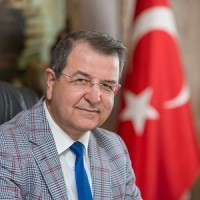
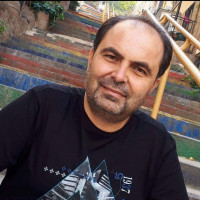
Yazı Ön İnceleme Kurulu
AUJEF Editör Yardımcısı
Bütüncül eğitim, Çoklu zeka kuramı, Yabancı dil eğitimi, Kapsayıcı eğitim, Program değerlendirme
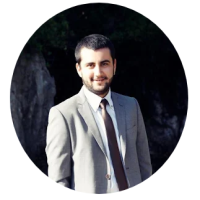





Ege Eğitim Dergisi Editörü
Eğitim Bilimleri ve Sosyoloji Dergisi Yardımcı Editörü (Aktif Değil)
İstatistik Editörleri


Türkçe Dil Editörleri
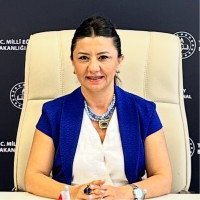
İngilizce Dil Editörleri
Yayım Editörleri
This journal uses a CC BY-NC-SA license.
[email protected] http://www.e-ijer.com
Postal Address: Erzene District, Istanbul Street, Ege University, Faculty of Education, 35040, İzmir/Türkiye